
Sunday, September 27, 2026
Twenty-Sixth Sunday in Ordinary Time
Ez 18: 25-28; Phil 2:1-11; Mt 21:28-32
The twenty-sixth Sunday highlights conversion as the path of reunion with God.
The three readings of the day emphasize that a converted heart is a beautiful gift to God.
The first reading from the Book of Ezekiel responds to people’s accusation that ‘The way of the Lord is not just.’ The Lord offers the corrective in two ways. Firstly, it is not that the ways of God are not just but that people’s understanding of justice remains distorted. Hence, without acknowledging their culpability, they accuse God. Secondly, God does not delight in anyone’s death or suffering. Instead, God wants His people to turn a new leaf in their lives and return to Him. As such, in Ezekiel, the language of ‘turning’ is highly significant. Here, repentance is not merely a superficial feeling of regret. Instead, it involves a decisive reorientation of one’s life. Thus, the first reading reminds us of our moral responsibility in making a choice for God without transferring the blame to others. God remains ever merciful and assures His transforming grace to anyone who makes a genuine effort to return to Him.
The second reading highlights that Christian moral life is an invitation to participate in the very mindset of Christ. More importantly, the ‘Christ Hymn’ (verses 6-11) reveals the radical selflessness of Christ in the way he, who was in the ‘form of God,’ takes the ‘form of a servant’ by emptying himself on the cross. Thus, Christ’s incarnation and crucifixion reveal why the Son of God is exalted above all. While the self-emptying love of Christ on the cross for the sake of others explains his greatness, his humility and example uphold fraternal service as the distinguishing mark of Christian authority. For Christ, true greatness lies in living and dying for others; true authority consists in becoming ‘a slave in love.’ Paul employs the Christ Hymn to exhort the Christian community that it should overcome any temptation to a self-serving lifestyle, competition for recognition, leadership visualized as domination, etc. For Paul, those who follow Christ should act with the internal liberty to love selflessly and serve willingly.
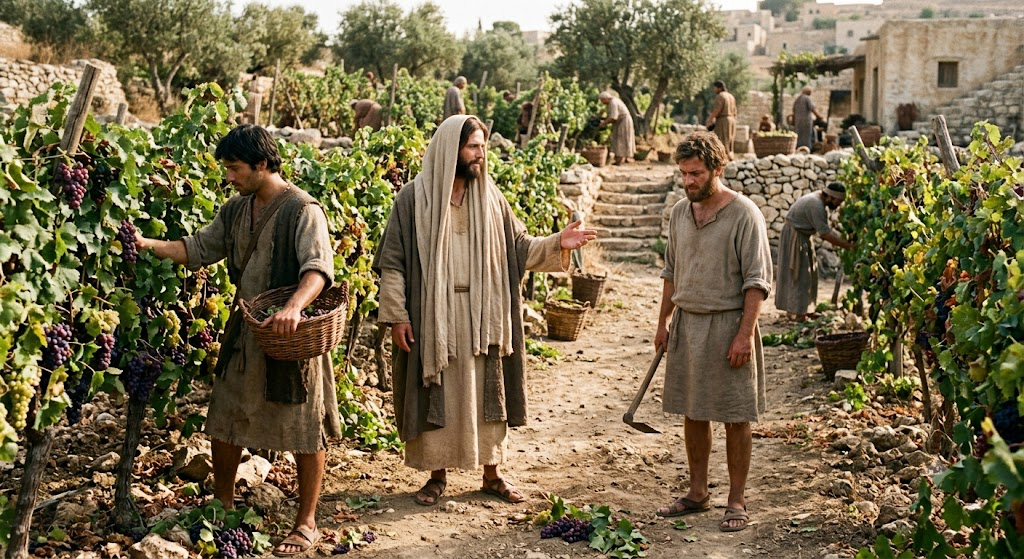
The Gospel text distinguishes between true repentance or obedience and its appearance. In other words, Jesus wants us to discover the difference between professed and actual obedience. The Parable of the Two Sons underlines that repentance is not mere verbal but a decisive change of direction in one’s life.
In the parable, the response of the first son flows out of spontaneity. His ‘no’ is spontaneous, as is his repentance. Upon self-examination, he had the courage to correct himself. His sincerity begets humility, with which repentance becomes possible for him.
The second son’s response is marked by cleverness, as he knows how to please his father. Once he answers in affirmation to make his father happy, he does not feel guilty about carrying on with his deceptive scheme.
We don’t know whether the father took care to find out who was sincere and who lied to him. However, God is concerned about our attitude. External signs are the criteria that humans use for judgement. In that sense, our capacity to judge others is very limited. But only God can see through our hearts and intentions. The internal forum is God’s chamber.
While the parable offers an example of ‘sincerity vs. pretension,’ Jesus wants us to understand that our repentance becomes complete only with qualifying actions in the real context. The one who sincerely repents is graciously received by God.
The three readings present us with key takeaways.
1. Repentance is not emotional: The first reading underlines repentance not as a feeling of regret but as a concrete response to act in favor of God. In its radicality, repentance is about course correction and a change of direction in one’s life.
2. Humility is in service of others: Any Christian virtue is not for oneself but ordained towards others. Christian discipleship is not a selfish exercise but imitating the very mind of Christ. Christian humility and obedience are exercises in love and are strongly other-oriented.
3. God’s grace reaches unexpected people. We cannot limit God’s generous invitation, as it is open to all. God’s grace is no respecter of human-made differences. An earnest heart becomes the acceptable gift to God.
Let us pray that our true conversion may become the very path of our reunion with God.
Fr. Dhinakaran Savariyar
Discover more from Gospel Delights
Subscribe to get the latest posts sent to your email.