
Sunday, December 10, 2023
Second Sunday of Advent
Isaiah 40: 1-5, 9-11; 2 Peter 3:8-14; Mark 1:1-8
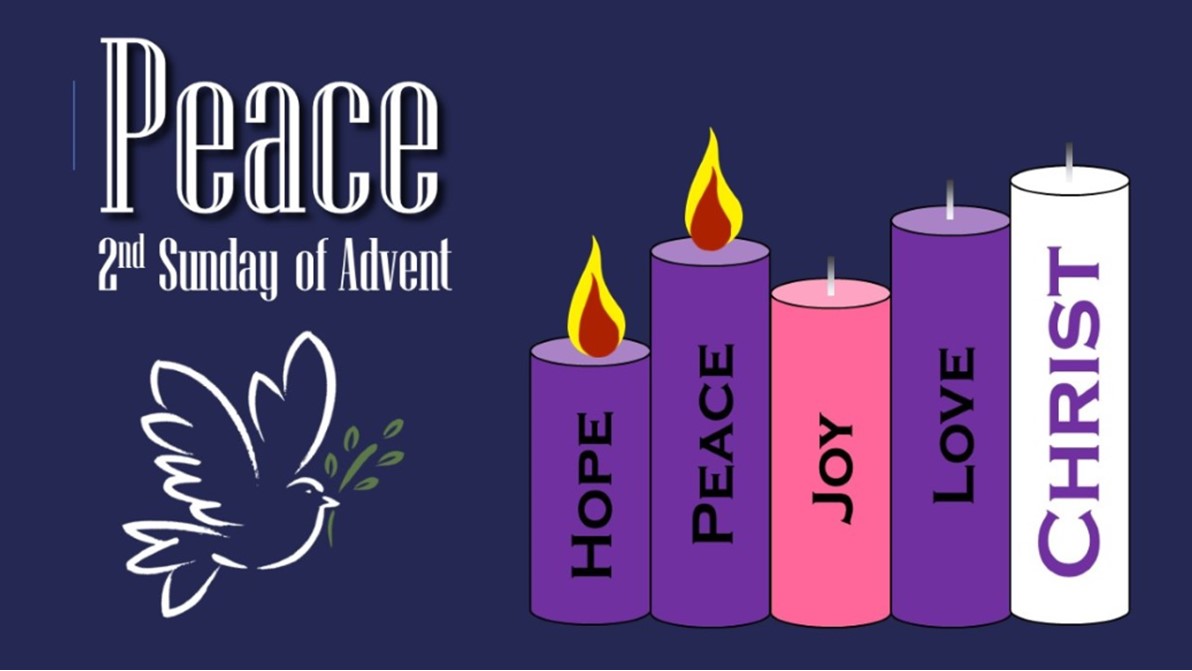
As we light the ‘peace candle’ on the Second Sunday of Advent, we are invited to make peace with God through our remorse and repentance. All the readings emphasize making peace with God through our reformed lives.
The first reading begins with the message of ‘comfort’ from God. For people battered in life, God’s message of comfort is also a message of reconciliation. God acknowledges this through the prophet saying, ‘Her service is at an end; her guilt is expiated; she has received from the hand of God double for all her sins.’ The coming of the Lord will straighten things out between God and His people. Jerusalem is called to be the herald who will announce God’s return to the rest of the cities of Judah. The coming of the Lord signifies peace. ‘God coming in peace’ is Israel’s comfort.
The second reading highlights the saving plan of God, according to which everyone will be saved and none will perish. If this is God’s plan of redemption for humanity, it only requires repentance on our part. Through our repentance, we open the door to holiness and devotion. This repentance is also the only way to enjoy peace. The reading also makes it clear that we should sustain our repentance by living a life without blemish. In sum, repentance is the way of making peace with God. It is a human way of settling accounts with God.
The Gospel passage on ‘John the Baptist preparing the way for the Lord’ is again about the theme of repentance, which is being continued from the first reading itself. John ‘the Baptist’ is in fact reconciling people with God through their repentance. The baptism given by John is a validation of people’s repentance.
For the kind of preparation that John makes ahead of Christ’s coming, the very person of John the Baptist becomes a symbol. We find it in three ways.
1.John the Baptist proclaimed repentance and, therefore, peace. In John the Baptist, God is providing an opportunity for people to repent. John’s mission is known chiefly through the baptism of repentance he administers. Through his message of repentance, John the Baptist was proclaiming peace to the people, who, in turn, made peace with God by choosing to be baptized.
2. John the Baptist was at ‘peace’ with himself. Even in his appearance, John the Baptist symbolized his message. His dress, food, and way of life symbolized what was expected of the people. He was not just the messenger but the message itself – in word and life. He gladly embraced his vocation to be a countersign to society. Looking at him, people changed their hearts.
3. John the Baptist was at peace with God. As a forerunner to Jesus, he did his job excellently well. At a time when people were expecting the Messiah to come and when people feared John for his prophetic words and life, they would have easily believed his claims if he ever projected himself as the Messiah. But John the Baptist pointed beyond himself to Jesus. God entrusted him with a mission, which he accomplished to the fullest satisfaction. By embracing a mission of peace, by being a person in whom peace was symbolized, and by being truthful to God through his mission, John the Baptist proves himself to be a ‘missionary of peace.’
The second Sunday of Advent emphasizes repentance as a credible way to make peace with God. Let us make peace with God and await His coming!
Fr. Dhinakaran Savariyar
Discover more from Gospel Delights
Subscribe to get the latest posts sent to your email.