
Sunday, November 22, 2026
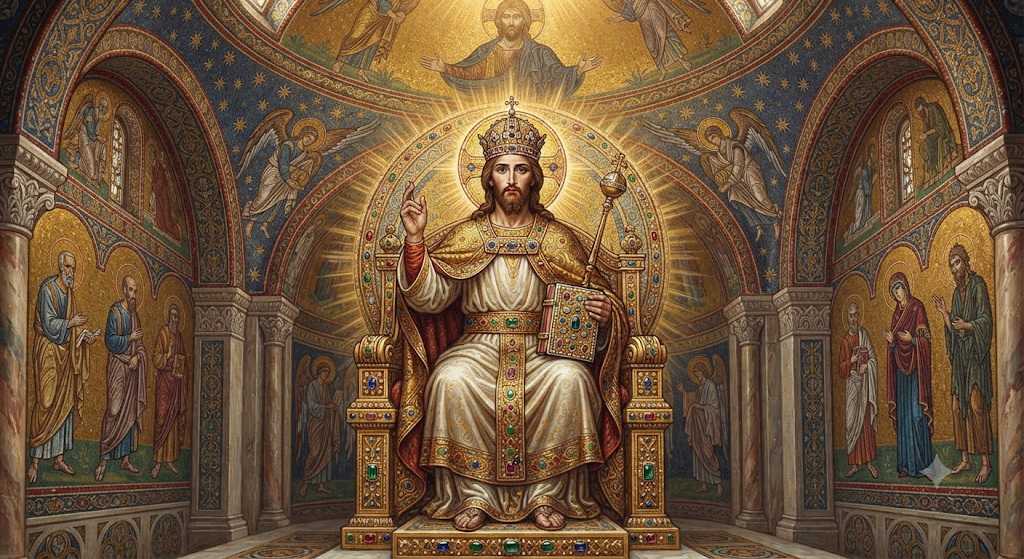
The Solemnity of Christ the King
Ez 34: 11-12, 15-17; 1 Cor 15: 20-26, 28; Mt 35: 31-46
The Solemnity of Christ the King invites us to learn to be servant leaders in Christ’s name.
Often enough, the expression ‘Christ the King’ might sound contradictory because Christ always identified with the poor and marginalized of his society, and therefore, we might well ask, ‘From where does Christ’s kingship come?’ While this may sound like a valid argument, we are called to remember that we employ the expression to mean that Christ is king through his love and service. Therefore, when we talk of Christ the King, we do not imagine a king who was known for his big palace, a royal throne, a diamond-studded crown, a host of servants and ministers, and a ruler who exercised authority and power through force. Instead, we remember Him who considered his tent among the people as his palace (Jn 1: 14), turned his cross into a throne, and wore a crown made of thorns. In other words, while others became kings through their birthright, or conquest, or even election, Jesus Christ became a King through his humility, obedience, service, and love.
These attributes of Christ the King invite us to reflect on him in three ways.
1. The King in Search of His People: Christ the King represents the ideal image of a king. We do not hail him a king because he was seated in a mighty palatial setting away from the humble dwellings of his subjects. Rather, this king got his feet dusted because he walked in search of his people. He tirelessly moved towards the sick, the abandoned, the marginalized, and the ‘sinners’ of his society. Since Christ the King constantly moved, the Kingdom he preached about was also a kingdom of movement. For this reason, he wished that the ‘missionary’ Church he founded sought out the lost and the least of society. This is why, even today, Christ the King becomes the hope of those who feel abandoned and neglected. For this reason, Christians can never remain stationary, and our identity is in searching for people.
2. The King Who Renounced His Throne: In the past, we have certainly heard or read of kings who visited their people in disguise to understand their conditions. To a certain extent, such kings simulated the poverty of their people. In total contrast, we witness with Christ the King something beautiful. He, who renounced his heavenly throne (Phil 2: 6-8), never had to disguise himself or simulate their suffering. Instead, he chose to live with his people and became one among them. The one who was put in a manger willingly underwent hunger, thirst, rejection, humiliation, disappointment, and suffering. He knew what it meant to laugh in joy and understood what it meant to cry or weep in pain. In sum, everything of the people became his own, and this is how Christ the King was filled with pure and holy love.
3. The King Who Knelt: Yet another striking image of Christ the King is that he was a king who chose to kneel. While for ordinary kings, standing tall and people bowing before them were the usual experiences, Christ the King always knelt in obedience (Phil 2: 6-8), in prayer (Mt 26: 36-46), and in service (Jn 13: 1-17). In humble obedience, Christ the King embraced the will of his Father as his own. In his prayerful communion, Christ the King found strength to carry forward his mission of love and service. In humble service, he gave the model of service in love. Christ the King did not demonstrate humility or service as merely decorative virtues. Instead, he lived those virtues in a radical manner so that our devotion to Christ the King should be a flawless imitation of his impeccable profile.
Christ the King invites us to follow his selfless movement, renounce our privileges, and kneel in humility, love, and service.
Let us pray that we may commit ourselves to imitating the profound model of Christ’s Kingship.
Fr. Dhinakaran Savariyar
Discover more from Gospel Delights
Subscribe to get the latest posts sent to your email.