
Thursday, March 5, 2026
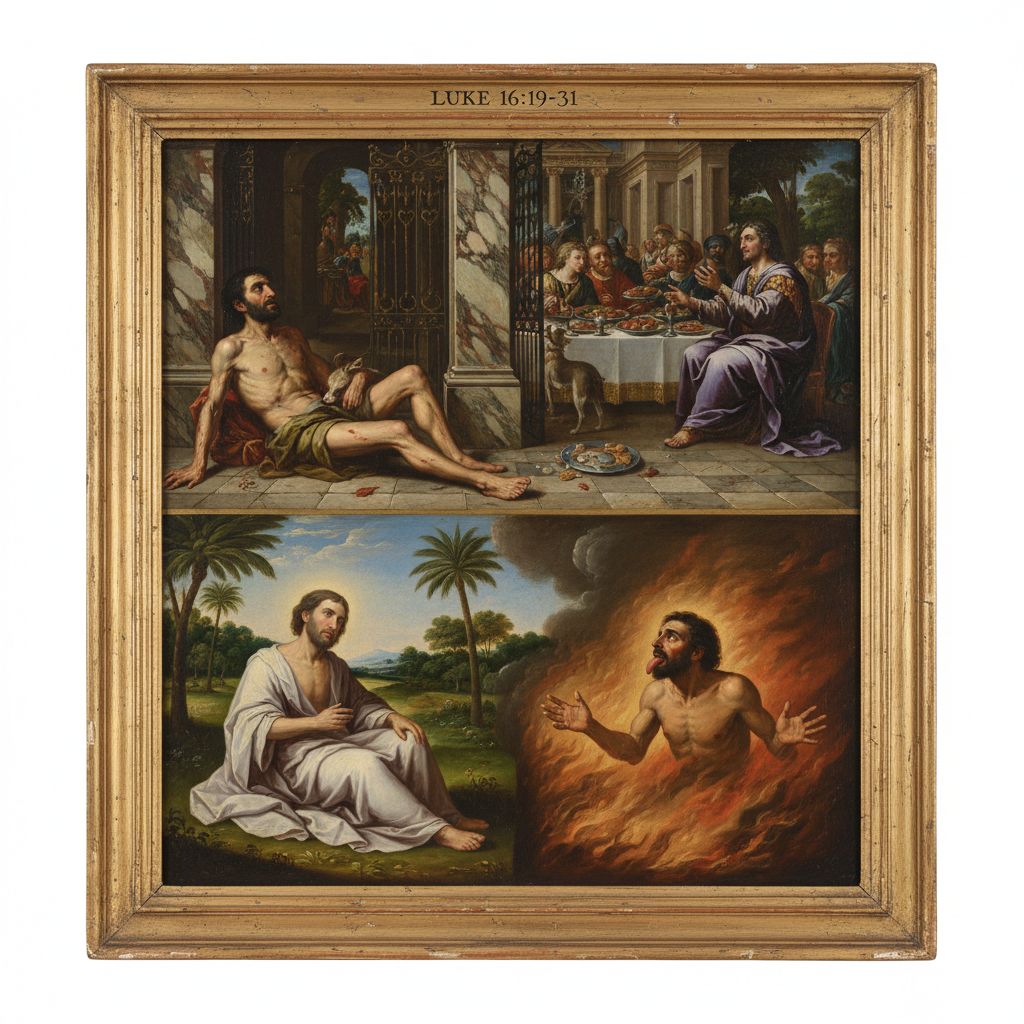
Jer 17:5-10; Lk 16:19-31
Today’s Gospel invites us to globalize love in order to eliminate the culture of indifference.
The Parable of the Dives and Lazarus demands a critical reading. Jesus’ storytelling is highly nuanced that a superficial reading would even lead to the opposite conclusion.
At first glance, it may appear as if Jesus is saying that the poor must endure suffering now in this world to receive their consolation in the afterlife. Further, it may even seem that Jesus is reinforcing his point that ‘The poor you will always have with you’ (Mt 26:11, Mk 14:7, Jn 12:8).
We must be certain that Jesus never contradicts himself. Jesus is not glorifying poverty. And he certainly does not promote acceptability or tolerance towards injustice with the false hope that heavenly reward will be compensation for those who suffer now. Instead, Jesus is condemning social neglect. He critiques the pervasive culture of indifference that even characterizes the society of our time. Moreover, by giving the Parable of the Dives and Lazarus, Jesus upholds the idea that the culture of love is the only antidote to the culture of indifference. These correctives are a must before reading the parable.
The uniqueness of the parable lies in its meticulous attention to the rich man’s characteristic failure.
1. The rich man is not condemned for his wealth but for his social neglect. Though Lazarus was lying at his door, he could not raise his eyes to see the indigent man with a view to solving his issues. A culture of indifference had hardened the heart of the rich man.
2. However, it is the same rich man who locates Lazarus ‘far off’ at the bosom of Abraham when he is in torment. When he is in need, he locates Lazarus immediately. But when Lazarus was in need, he did not even raise his eyes. Again, finding Lazarus at the side of Abraham, the rich man’s instinct is not to ask pardon but to make him run errands so that ‘the tip of his finger in water can cool his tongue.’ For the Dives, Lazarus is a servant even in death.
3. We must also study the quick fall of the rich man. It quickly changes from him enjoying sumptuous meals each day to looking for a drop of water from Lazarus’ finger. The scraps could have formed the bridge between the two people and their fates. But he did not care that Lazarus could have gladly fed himself to the full even from the scraps of his table.
4. It is also interesting to note that even the dogs licked Lazarus’ sores. The dogs were not feeding on the scraps from the rich man’s table but licking Lazarus’ wounds. The rich man’s indifference and stinginess extended beyond Lazarus. It was universal in character that the rich man noticed neither Lazarus nor street animals. The one who was so full of himself had no room for anyone or anything.
5. The rich man’s manic self-obsession is highlighted even in the state of his torment. Everything mattered if only it was about him or his family. Facing rejection from Abraham with his first proposal, the rich man now wants Lazarus to be sent to warn his five brothers. Even in torment, what comes next to himself is his family, not the common good.
6. The second request of the rich man to send Lazarus to warn his five brothers lets us credibly conclude that, in all likelihood, his five brothers were indifferent like him. The like knows the like. Abraham rejects his proposal for the second time because the ability to choose love comes from the willingness to listen to ‘Moses and the Prophets’ and to amend one’s ways accordingly.
In sum, when Jesus says, ‘The poor you will always have with you,’ he is not globalizing poverty but globalizing love because the Lord effectively underlines the umpteen opportunities to choose love and intervene in other people’s lives.
In essence, the Parable of the Dives and Lazarus is Jesus’ way of reminding us of the responsibility to love and to propagate it with all we can.
Let us pray that we may globalize love by not allowing indifference to rule our hearts.
Fr. Dhinakaran Savariyar
Discover more from Gospel Delights
Subscribe to get the latest posts sent to your email.