
Saturday, March 14, 2026
Hos 6:1-6; Lk 18: 9-14
Today’s Gospel highlights how our idea of God shapes our lives.
The text reads that ‘Jesus addressed this parable to those who were convinced of their righteousness and despised everyone else.’ What was actually the problem?
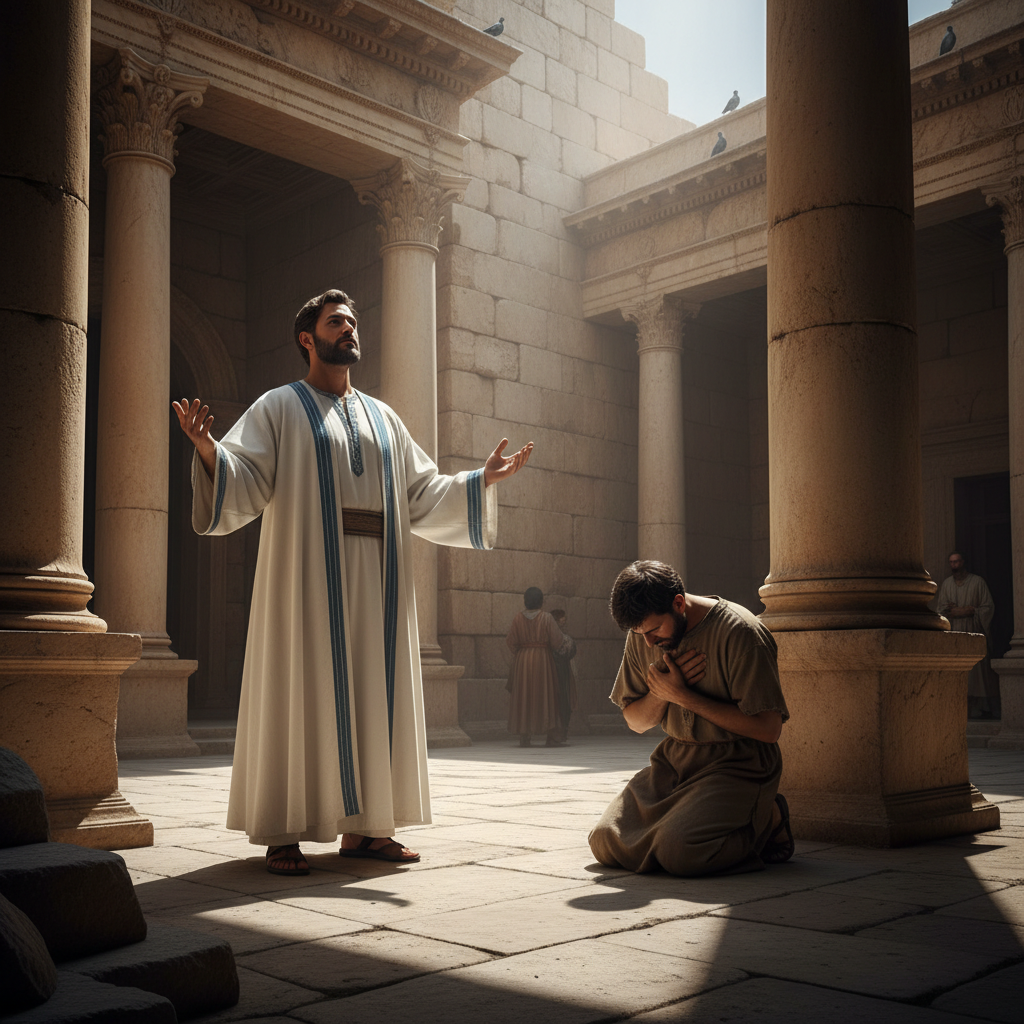
In the very first line of the parable, Jesus shows that ‘Two people went up to the temple area to pray.’ There is no second opinion that both the Pharisee and the tax collector were religious. However, how they each understood God eventually shaped their lives.
The Pharisee needed God only for external validation, not for spiritual nourishment. Since he was already convinced of his righteousness, his tone is neither sincere nor humble. The description says that ‘he took up his position and spoke this prayer to himself.’ We must note that he was not praying to God. Instead, in the name of praying to God, he was praying to himself. He thanked God not for who he was, but for who he was not – ‘like the rest of humanity – greedy, dishonest, adulterous.’ To show himself to be righteous, he makes everyone else a sinner, including the tax collector who stood behind him.
What was the Pharisee’s idea of God? As we have noted earlier, though the Pharisee showed himself religious, in reality, he needed a god to suit his needs. Hence, he fashioned a god of his choice rather than letting God be. His prayer reveals how self-righteous he is even in the presence of God. His self-righteous prayer reflects an idea that it was God who needed him more than he needed God. Hence, he loved God only for himself and for what it conferred upon him – fame, approval, and status. In sum, the Pharisee’s god was tailored for his needs and designed to his satisfaction so that he could use such a god for his selfish motives.
But unlike the self-righteous Pharisee, the tax collector went to the temple – to pray, and he prayed. He prayed sincerely and honestly, expecting God’s mercy and forgiveness. The fact that he was not daring to raise his eyes to heaven, the abode of God, and was beating his chest demonstrates that he had nothing to justify himself but only longed for God’s mercy and forgiveness. Unlike the Pharisee, the tax collector seems well aware of his spiritual state, and therefore, he manifests a behaviour that proves that he needs God more than anything else. Unlike the Pharisee, who behaves entitled and takes God’s love for granted, the tax collector wants to be forgiven and accepted by God.
Jesus gives us this parable to help us realize that our idea of God shapes the very idea of life. The self-righteous Pharisee, who finds no match for his righteousness, believes that his hatred towards others is the only inevitable choice he is finally left with. What a blunder to make in God’s presence!
This is how Jesus underlines the danger of self-righteousness. It can travel so far as to push God and others out of one’s very imagination and life. The self-righteous people are so full of themselves that there is no place for God in their lives. They do not care for others because they fail to fare as well in perfection as they do.
How does the idea of God influence my life? If I love God, how does it shape who I am and what I do? Who should I become as a result of my love for God?
Let us pray that our idea and experience of God may profoundly change our lives for the better.
Fr. Dhinakaran Savariyar
Discover more from Gospel Delights
Subscribe to get the latest posts sent to your email.