
Sunday, April 21, 2024
Fourth Sunday of Easter
Acts 4:8-12; 1 n 3:1-2; Jn 10:11-18
We celebrate the Good Shepherd Sunday.
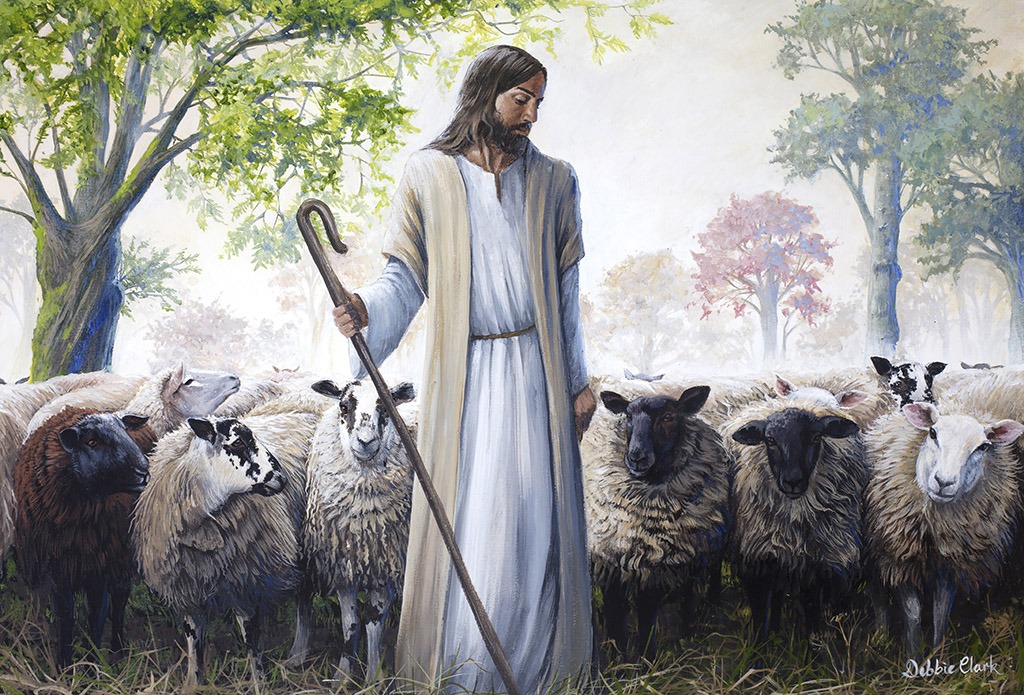
Jesus, the good shepherd, is our reason to celebrate the day. How is Jesus the good shepherd?
Who Jesus was (Person) and what he did (Act) tell us how he is the good shepherd.
The first reading helps us understand the kind of person that Jesus is from the testimony of Peter. The examination of the good deed and the rejection of the cornerstone are ironic. No one questions a deed that healed someone’s disability. No one constructs a building by discarding the cornerstone. However, both are true here.
The apostles are questioned because the deed has been done in Jesus’ name. Though Jesus was good and holy, he was rejected by the Jewish leaders and people.
Peter holds that salvation can come only through Jesus. As we understand from Jesus’ sacrifice on the cross, he did not distinguish himself through titles but through sacrifice. In this sense, Jesus is the wounded healer. Dietrich Bonhoeffer said, ‘Only the suffering God can help.’ Peter affirms the same. Our help comes from Jesus because he suffered for us.
The second reading reveals something important to us.
We understand God’s love through our own status as the ‘Children of God.’ However, it was Jesus who helped us understand God’s love for us. If not for Jesus, who came representing God’s love, we would not have realized the love of God for us. Jesus also helped us realize that, as God’s children, we will also share in the glory of Jesus, the Son of God.
We needed Jesus to understand our identity and glory as God’s children.
The Gospel ties the themes of the first and second readings through the imagery of Jesus, the good shepherd.
Jesus is the good shepherd, not because he owns a flock but because he gives his life for them. By knowing every sheep individually and by leading them from the front, Jesus proves to be the good shepherd. Because Jesus endangers himself to protect the sheep, the safety of his flock defines Jesus as the good shepherd par excellence.
Secondly, Jesus is the good shepherd because he is not like a hireling. In times of danger, the sheep become the shield for the hireling, whereas Jesus becomes the shield for his flock. When the wolf becomes a reason for the hireling to escape, the sheep become the reason for Jesus to lay down his life. When the hireling works for pay, Jesus, the good shepherd, pays with his life.
What does it mean to follow the Good Shepherd today?
Representing Christ: Jesus came to the world announcing God’s love. If Jesus succeeded in something, it was to help people understand themselves differently as God’s children and as God’s agents in the world. We discover such empowerment in the lives of the apostles. Failing to empower others in God’s name, just as Jesus did, is failing in our mission. By helping people realize their dignity as God’s children, Jesus, the good shepherd, enhanced the esteem of his flock.
Serving in Jesus’ Name: The Church exists for mission. Therefore, walking in the footsteps of the good shepherd means only serving others like him. The good shepherd who laid down his life for others is the only reason for Christians to serve others. The good shepherd redefines the concept of leadership. Accordingly, we will be unworthy as leaders if we do not know how to serve. We learn from the good shepherd that to lead is to serve.
Everyday Model: The good shepherd is not just a biblical model. It is a model for life. Therefore, the model has to be actualized at all levels, be it the Church, family, society, or even the self. Selfless sacrifice and an understanding of oneself in service to others are wonderful examples that the good shepherd invites us to imitate. The good shepherd’s life is a call for transformation.
When Napoleon invaded Austria, his army had to cross a narrow bridge to enter the Austrian territory. His troops became nervous because the Austrian troops had already begun firing at them from an advantageous position. Even Napoleon’s commander was reluctant to proceed. However, sensing the indecisiveness of his commander, Napoleon snatched the flag from his commander and charged ahead on the narrow bridge, shouting, ‘Come on, men, save your leader!’ Hearing this battle cry, the troops were spurred into action and not only crossed the narrow bridge but conquered the region as well.
The anecdote from Napoleon’s life offers the needed contrast to understand the greatness of Jesus, the Good Shepherd.
Napoleon understood himself as a leader because he was saved; whereas Jesus became the head because he sacrificed himself.
The difference between Napoleon and Jesus lies in their life statements: ‘Save your leader’ and ‘Leave my flock.’
Fr. Dhinakaran Savariyar
Discover more from Gospel Delights
Subscribe to get the latest posts sent to your email.