
Sunday, May 26, 2024
The Solemnity of the Most Holy Trinity
Dt 4:32-34,39-40; Rom 8:14-17; Mt 28:16-20
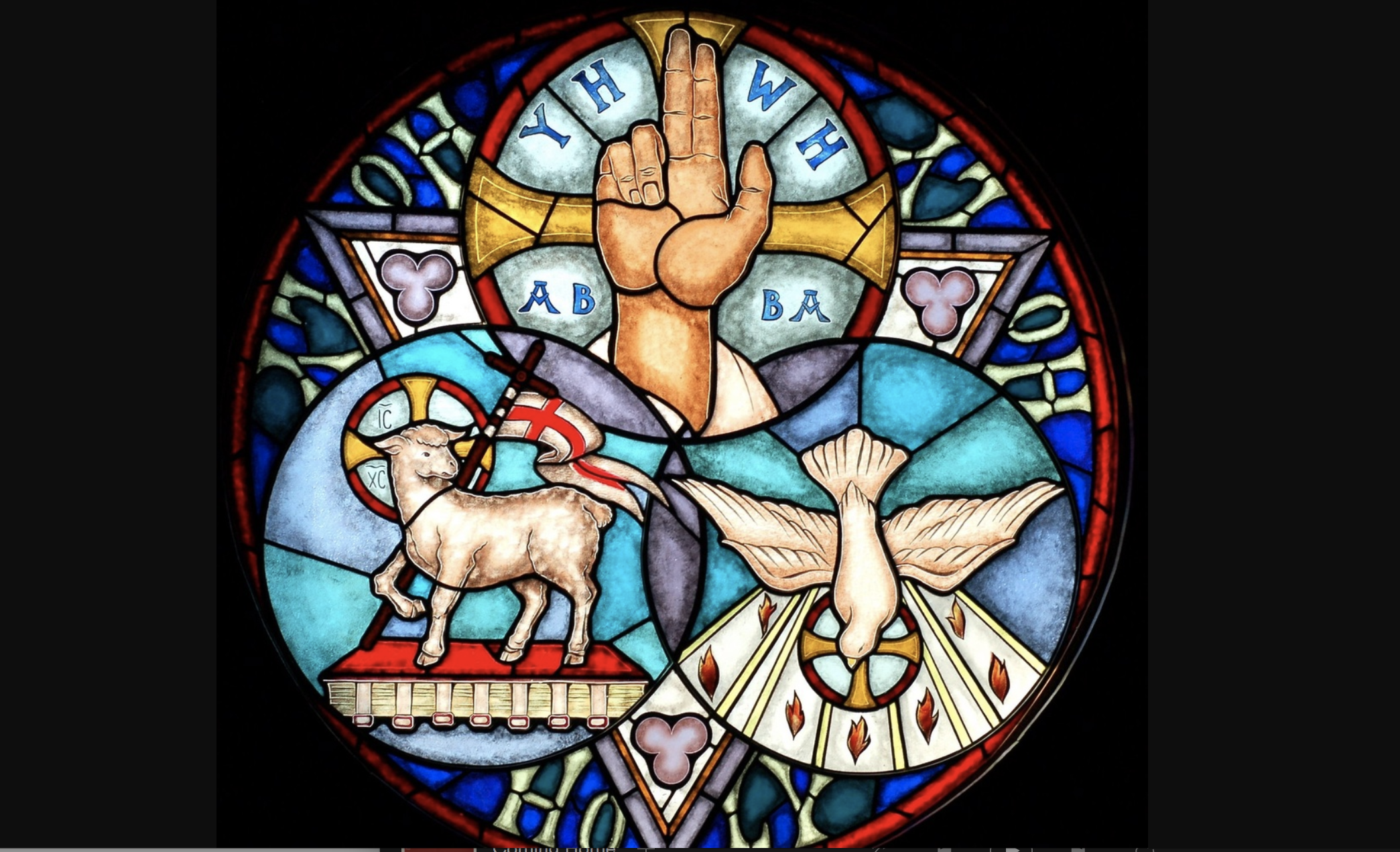
The solemnity of the Most Holy Trinity celebrates the fact of ONE GOD in Three PERSONS.
The Father, the Son, and the Holy Spirit are each fully God. The whole God is in each person, and each person is the whole God. Each person is God-in-Himself.
Each person possesses the entire being of God (the one divine essence), and the entire being of God is in each person. Thus, each person indwells the other – the three mutually contain one another (perichoresis) – for the one being of God is undivided.
However, the three persons are not identical to one another. They are both eternal and distinct.
Oftentimes, the Mystery of the Holy Trinity comes across to us as a mathematical puzzle because of such formulaic articulation.
But how often do we think of the Trinity as offering life principles for Christians?
Christians are invited to imbibe the Trinitarian love that gives us life and character.
The German Jesuit theologian Karl Rahner observes that because God is love, God is Triune.
God, who is love, needs to be more than one person in order to be love. And this is why God is Triune.
For this reason, St. Augustine held that love requires both a lover and a beloved. Love requires a relationship. While humans must look for love outside of themselves, God, who is perfect in every way, has this within His very being. The statement that ‘God is love’ captures this truth.
Secondly, the Trinitarian love also explains the creation. Again, Rahner tells us that because God is love, God ‘needs’ to love more than God’s self. For that reason, God creates us so as to enter into love with us and bring us into His Kingdom.
Thirdly, the Trinitarian love is also the ground of our redemption. As we read in John’s Gospel (3:16), ‘God so loved the world that God gave God’s one and only Son, that whoever believes in him shall not perish but have eternal life.’
Fourthly, this Trinitarian love is the way of our sanctification. This is why Jesus commanded us to love God, to love our neighbors, and to love ourselves.
Finally, the Trinitarian love is our goal because we believe that in God’s Kingdom, we will be united forever with God and those who have gone before us.
How can we capture the richness of the Trinitarian love in our day-to-day lives?
The Trinitarian love is an invitation to unity, equality, and stewardship.
Call to Unity: For Christians, the model of unity comes from the Trinity. One God in three persons, or the three persons in One God, invites us to understand that diversity can be a building block of unity. Such unity born of love does not compromise the distinctiveness of the persons involved.
Call to Equality: Christianity and disunity or division are profoundly oxymoronic. The Holy Trinity is the perfect model of equality where each person enriches the life of the other so that the will to superiority or domination has no place within such a perfect union born of love. As such, the Trinitarian love commands us to work against divisive structures like race and caste. The Trinitarian love inspires us to relentlessly pursue equality and justice.
Call to Stewardship: If God found Himself in creation so that it remains an object of His love, creation as God’s expression deserves our responsible care. In Pope Francis’ vision, Christians are called to promote integral ecology. Our responsible stewardship toward creation is the very means to glorify God because everything that God created was very good (Gen 1:31). The Trinitarian love offers the reason why Christians should find God in and through His creation.
Therefore, the Mystery of the Holy Trinity is not some abstract concept or idea, removed from the practical lives of Christians.
Rather, the dynamic nature of the Trinitarian love invites us to keep exploring the ways in which we can actualize it in our daily lives.
Fr. Dhinakaran Savariyar
Discover more from Gospel Delights
Subscribe to get the latest posts sent to your email.