
Sunday, February 25, 2024
Second Sunday of Lent
Gen 22: 1-2,9-13, 15-18; Rom 8: 31-34; Mk 9: 2-10
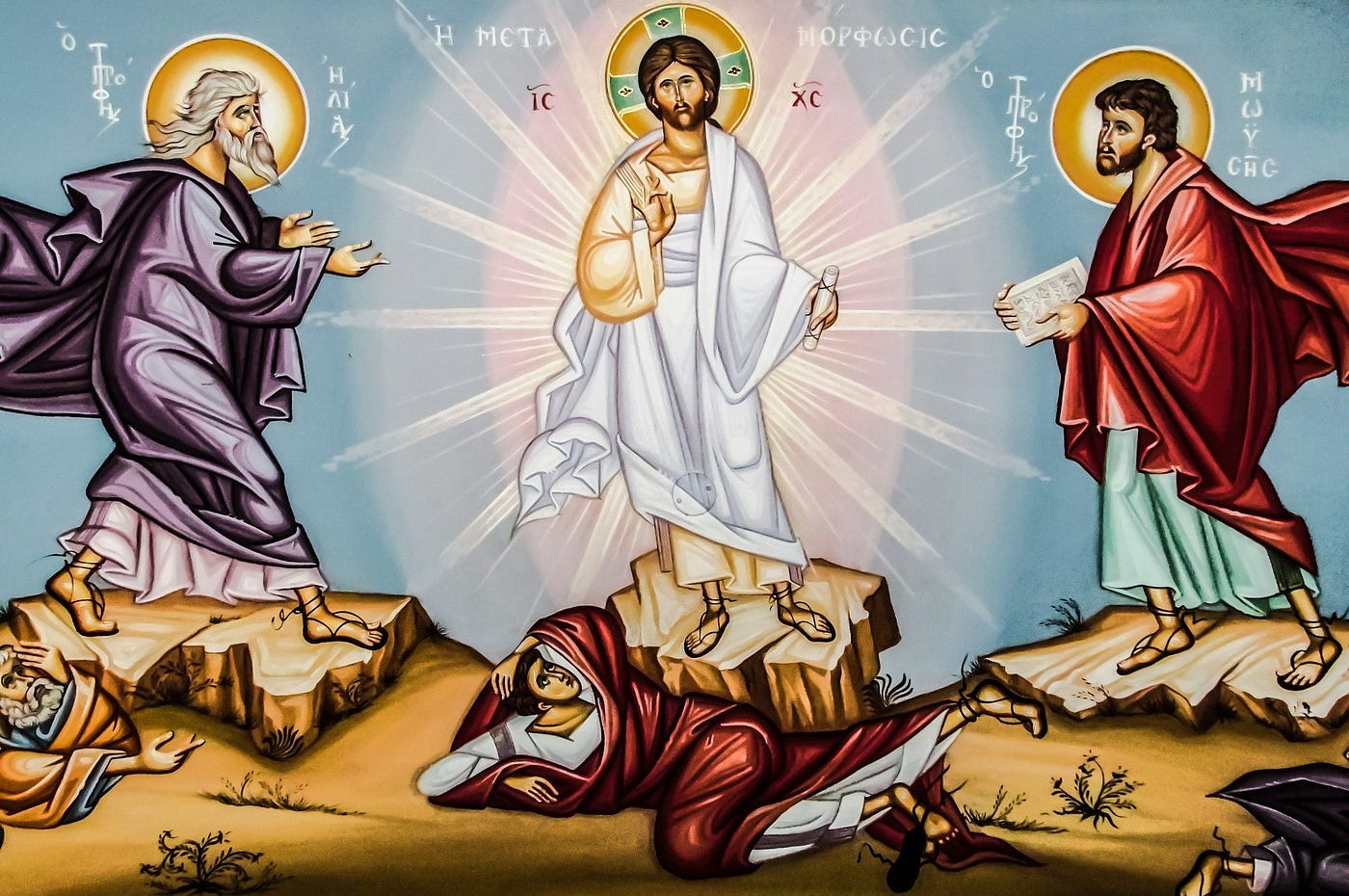
Today, we reflect on Jesus’ transfiguration.
A comparative method reveals the rich meaning behind the readings of the day.
The transfiguration account in the Gospel, when compared to the first reading, lays out some interesting details.
There are two mounts: Mount Moriah, where God wants Abraham to sacrifice his only son Isaac; and Mount Tabor,where Jesus is transfigured.
There are two sons: Isaac, whose life is demanded, though he is saved by God’s intervention later; and Jesus, whose life is needed for the salvation of humanity.
There are two fathers: Abraham, from whom the unimaginable sacrifice is expected; and God, the Father, who has to suffer the loss of His Son as it is the only way to save humanity.
We also note a contradiction between the first reading and the Gospel account. In the first reading, the only way God could fulfill his promise to Abraham was to save Isaac’s life. Whereas in the Gospel, the only way God could fulfill his promise was to sacrifice His own Son.
In that sense, the ‘transfiguration’ is taking place in different ways in the first reading as well as the Gospel. Abraham, of whom an unimaginable sacrifice is demanded, comes back home reassured of God’s promise. Jesus comes down the mountain to ‘set his face toward Jerusalem’ (Lk 9:51).
Abraham takes the test of his faith and emerges victorious. Jesus undertakes this discernment process and comes out victorious too, especially as he will ever be moving toward Jerusalem.
In both accounts, ‘witnessing to glory’ does not happen before walking through the challenges. To witness the ‘glory of God’s promise,’ Abraham has to face the test of his faith. Ahead of the ‘glory of resurrection,’ Jesus suffers crucifixion and death.
The God, who tells Abraham, ‘Do not harm the boy,’ tells Jesus’ disciples to ‘listen to him,’ though Simon Peter wants to freeze the moment of glory on the mount.
The God, who ‘restrains’ Abraham from killing his son, ‘restrains’ Jesus’ disciples from freezing the moment so that they would listen to His son’s decision to lay down his life on the cross.
More importantly, God, who tests Abraham by requiring the sacrifice of his only son in the Old Testament, is offering His only Son in the New Testament. God ‘tests’ Abraham in the Old Testament. But God ‘suffers’ in the New Testament. God is self-sacrificial when it comes to saving humanity through His only Son.
The beautiful question of St. Paul in the second reading gives us a better understanding of the nature of God’s sacrifice. ‘If God is for us, who can be against us?’ Yes, God is for us, when He ‘fulfills’ his promise by saving Isaac’s life. God is for us when He ‘suffers’ the loss of His son. God is for us when He only ‘thinks’ of our redemption, even at the cost of his son’s life.
The most powerful God is genuinely sympathetic to human situations as well. This is the mystery of God that we are called to reflect on.
We have three lessons from today’s Eucharist.
1.Challenges are part of human life. We cannot escape them. But when we walk through them with determination, we discover God’s help.
2. Challenges call for sacrifices. We lose something in order to gain something. Hard work is the only way to success.
3. Challenges transform us. The lessons we learn shape and mold our lives. But the magic can happen only with our willingness to walk through them.
The ‘transfigured’ Christ teaches us determination, altruism, and love. He invites us to undergo the same ‘transfiguration’ experience to be like him.
Fr. Dhinakaran Savariyar
Discover more from Gospel Delights
Subscribe to get the latest posts sent to your email.
Meaningful reflection and your comparison of the readings truly added depth to my understanding.