
Friday, July 3, 2026
Feast of St. Thomas, Apostle
Eph 2:19-22; Jn 20:24-29
The feast of St. Thomas invites us to grow in faith, humility, and conviction like him.
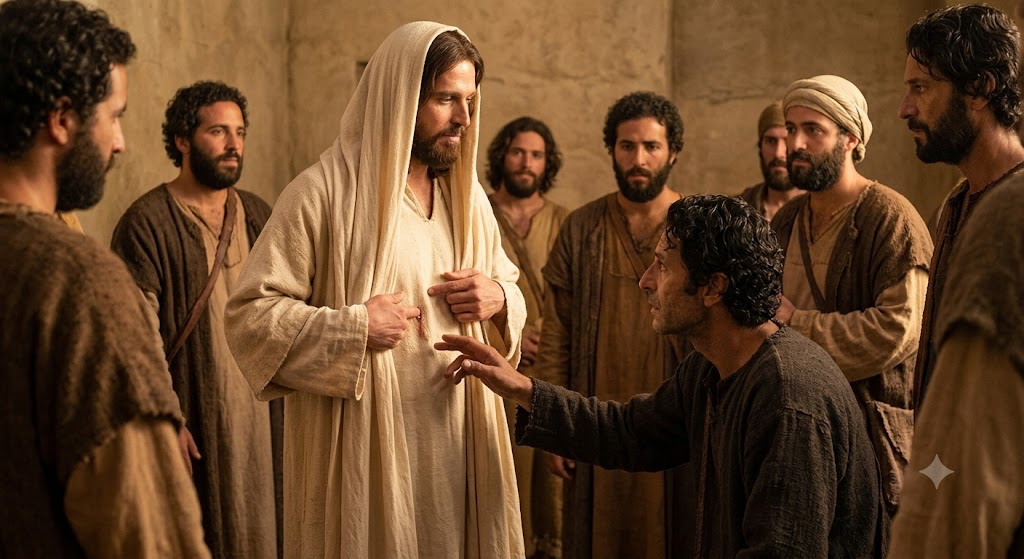
Though there are several mentions of St. Thomas in the Gospels, if there is one verse that overshadowed the greatness of the apostle, earning him the title ‘Doubting Thomas,’ it is John 20:25, where he said to his fellow disciples, ‘Unless I see the nail marks in his hands and put my finger where the nails were and put my hand into his side, I will not believe.’
Here, we must see that the doubt that Thomas expressed revealed the human side of the apostle that was still grappling with the truth of the Lord’s resurrection. Hence, in Thomas, we find our own nature best represented. We may reflect on St. Thomas in three ways.
Doubt That Matured: When other disciples announced to Thomas, ‘We have seen the Lord,’ Thomas did not believe their words. But as we celebrate the feast of St. Thomas, we are called to remember that while he may have had initial doubts about Christ’s resurrection, his doubts and questions eventually matured into one of the most profound professions of faith found in the Gospels. Thus, the apostle who doubted did not say upon meeting the Lord, ‘Now I believe because I have seen.’ Instead, he not only believed in the Lord’s resurrection but also proclaimed his faith in the Risen Lord’s divinity. Indeed, Thomas doubted initially but was not imprisoned by it. Thomas’ faith grew through his doubt.
Overcoming Human Imperfection: The title ‘Doubting Thomas’ reveals the imperfection that the apostle suffered. Thomas reminds us that beginning with imperfection is not a sin or problem as long as we show the will and determination to overcome it. In this sense, the imperfect Thomas who doubted matured into someone who acknowledged and professed the Risen Lord’s divinity. When we experience struggles and doubts in our faith journey, St. Thomas reminds us that they do not prevent us from becoming faithful disciples of the Lord. In this way, Thomas represents all of us. Mirroring our doubts, fears, and questions, Thomas reminds us that all these human elements can become stepping stones towards deeper faith. The most important thing is not that we do not doubt at all but that it matures into faith.
Growing in Humility: When Thomas discredits the account of his fellow disciples who encountered the Risen Lord, Thomas comes across to us as someone very stubborn in his views. When he insists on a personal encounter with Christ, he appears even arrogant in his attitude. However, that is not who Thomas is. Instead, by expressing his desire for a personal encounter with Christ and later receiving such an opportunity, Thomas reveals his deeper self. Thus, Thomas, the apostle who doubted the Lord’s resurrection, allowed himself to be corrected by the Lord Himself. His life highlights the fruit of such a correction he received from the Lord. Thomas not only travelled thousands of miles to preach the Gospel in India but also remained a loyal and fearless missionary till his martyrdom. How did such transformation become possible in Thomas? It was his humility that allowed such a transformation to occur in him. Thomas doubted. But he remained humble enough to be corrected by the Lord. His profession, ‘My Lord and My God,’ is only a sign of his humble surrender to Christ.
The life of St. Thomas offers inspiring lessons for us.
1. We must never be afraid of honest questions. Seekers of the Lord seek Him through sincere doubts, which eventually mature into faith.
2. Thomas’ determination to have a personal encounter with the Risen Lord is amazing. He never stopped seeking Christ. Our spiritual life hinges on making our faith personal.
3. Change comes when we remain humble. Our humility and openness to truth allow God to transform our hearts, just as it happened in the example of Thomas.
Let us pray that we may grow in faith, humility, and conviction like St. Thomas.
Fr. Dhinakaran Savariyar
Discover more from Gospel Delights
Subscribe to get the latest posts sent to your email.
sr.shinychoorakatil@gmail.com