
Sunday, March 8, 2026
Third Sunday of Lent
Ex 17:3-7; Rom 5:1-2, 5-8; Jn 4: 5-42
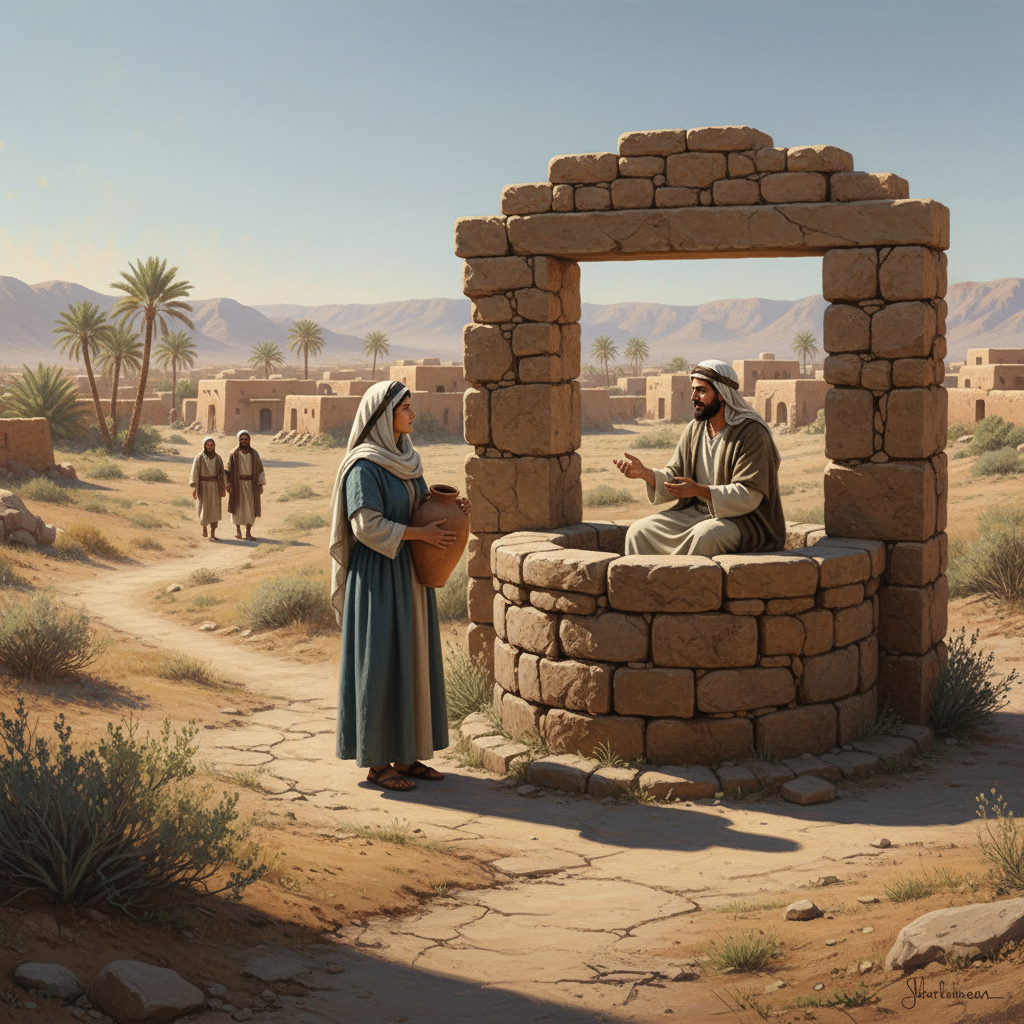
The Third Sunday of Lent invites us to reflect on the faith and testimony of the Samaritan woman.
The readings of the day help us discover the faith that transforms lives.
The first reading highlights the Israelites’ lack of faith in God despite the fact of God’s saving action and preferential option for them. The details of the text call for a careful reading and reflection. Three points deserve our attention. At first, the complaining and murmuring of the Israelites reveal their ingratitude. They accuse the Lord of ‘letting them die of thirst,’ though this is the same Lord who saved them miraculously from Egyptian slavery. Secondly, in their thirst, the Israelites doubted if the Lord was in their midst. They lose their faith in the Lord just because they briefly suffered a shortage of water. Finally, their agitation, rebellion, and ingratitude are communitarian. All of them are together in voicing their opposition against the Lord. Unfortunately, not one seems to recount what the Lord has done for them. In sum, the first reading underlines the Israelites’ loss of faith in God that occurs in stages despite the fact that God was forever good, faithful, and kind to them.
In the second reading, Paul emphasizes the saving role of faith in Christian life. The apostle to the Gentiles teaches that we are justified by faith in Christ, who died for us even when ‘we were sinners.’ Hence, for Paul, our justification can come only through our faith in Christ, who, by his death, abolished the sin that separated us from God. While Christ’s death proved the depth of God’s love for us, it also made things right with God. In other words, our peace or reconciliation with God is a reality thanks to the selfless sacrifice of Christ on the cross. Hence, it is through Christ that we gain access to God’s grace, which gives us the hope of sharing in God’s glory in the future. Thus, Christian life is centered around the sacrifice of Christ, and faith in Christ becomes the worthy way in which we can commune with God. In sum, faith in Christ is the foundation of Christian life and the only way to salvation.
While all the readings are interconnected, the striking parallels between the first reading and the Gospel invite our attention. The Gospel text presents the Samaritan woman as a model of faith who restores what Israel had lost. Hence, we rely on the insights of the first reading for our reflection on the Gospel.
In their rebellion against God, the people of Israel forgot what the Lord had done for them. But in the Gospel, the Samaritan woman shows faith and gratitude. Nothing seems to be good about her life. Beyond the seemingly scandalous lifestyle, her own life lacks vigor and enthusiasm. Thus, it appears that she had nothing to be grateful for in her life. However, it is she who remains grateful because she found the Lord. She becomes the missionary of Christ by declaring his divinity. To her own villagers, she proclaims Christ as the Good News she heard, witnessed, and believed. Thus, in the face of the faithless betrayal of God’s people, the marginalized Samaritan woman’s faith display calls for imitation.
Secondly, in total contrast to the Israelites, whose loss of faith in the Lord takes place in stages, the Samaritan woman’s faith discovery in the Lord occurs in stages. Though she was a Gentile and stranger, her understanding and faith in Jesus steadily progressed from ‘How can you, a Jew’…to ‘sir…’ to ‘prophet…’ and then to ‘Messiah.’ While those who knew the Lord were ready to renounce their faith due to water shortage, the Samaritan woman who did not know the Lord discovered him and readily believed in him. While the shortage of water leads God’s people to a loss of faith, the Samaritan woman’s search for water guides her to the fountain of the Living Water.
Thirdly, while the first reading reflects the communitarian failure on the part of the people of Israel, the Samaritan woman transforms her personal encounter with Jesus into a witness to her people, who come to believe in Jesus as a community. In turning herself into a witness for Christ, the Samaritan woman is very bold not only in her faith but also in her proclamation. She is not deterred by the fact that, being a woman, her testimony could be discredited by people. Nothing prevents her from reaching out to the community and appealing to them to come and see what she herself has found. Her sincere testimony wins hearts. The Samaritan woman’s personal encounter with Jesus now becomes that of the entire community. Her testimony began with the words, ‘Come and see a man who told me everything I have done.’ And it was generously responded, ‘We no longer believe because of what you said, for we have heard for ourselves.’ Indeed, her townspeople declare that their faith in Jesus is no longer based on her testimony but on their own personal encounter with Jesus.
The three readings help us with inspiring thoughts for action.
1. We must always remember God’s blessings with gratitude. Temporary struggles or hardships should not lead to our loss of faith. Gratitude becomes the best explanation of our faith.
2. Our salvation comes from God. Christ’s sacrifice on the cross made it happen. We must do justice to God’s generous initiative through our goodness by relying on God’s grace.
3. The Samaritan woman teaches that true faith not only believes but also makes believers. We learn from her what true evangelization must look like.
Let us pray that we may inherit the faith that transforms lives.
Fr. Dhinakaran Savariyar
Discover more from Gospel Delights
Subscribe to get the latest posts sent to your email.