
Sunday, October 4, 2026
Twenty-Seventh Sunday in Ordinary Time
Is 5:1-7; Phil 4:6-9; Mt 21: 33-43
The twenty-seventh Sunday highlights the relationship between faithfulness and bearing fruit.
The three readings of the day help us discover the theme.
‘The Song of the Vineyard’ from the first reading highlights a moving divine lament over the house of Israel and Judah. The details of the song highlight the earnestness of the owner (God) to lavish His care upon the vineyard. God spares no effort to protect His vineyard so that His care looks exhaustive. However, what He is forced to witness is the unyielding and recalcitrant behaviour of His people, symbolized by the vineyard. God is so disappointed to witness bloodshed and cries of distress (wild grapes) instead of justice and righteousness (grapes). The song gets more poignant when God asks, ‘What more was there to do for my vineyard that I had not done?’ The anguished question reveals the vulnerable God in love for His people. However, people fail to understand that. Hence, the disappointed God wants to show His people what it means to walk away from His generous love and diligent protection. In life too, when we walk away from God, we expose ourselves to danger and eventually suffer ruin. By distancing ourselves from God, we willingly dismantle hedges and walls and let ourselves be overgrown with thorns and briers. We must note that though condemnation comes from God, it is the people of Israel who invite it upon themselves. The first reading reminds us that the blessings and gifts of God make a moral claim on us, and it is our responsibility to respond to that love in the same measure. Our life becomes a tragic parable if we fail to meet God’s expectations of us.
The second reading is an invitation to guard ourselves from deranged thinking and instead concern ourselves only with things that concern God. In three ways, Paul drives his point home. Firstly, he wants people to get conversational with God. God is the right addressee when we face problems and difficulties that make us anxious or worried in life. Secondly, for Paul, peace does not result from what we just stop doing but also from what we start thinking about. Hence, we need to guard our thoughts in a way that we think only about ‘whatever is true, whatever is honorable, whatever is just, whatever is pure, whatever is lovely, whatever is gracious.’ If we meticulously follow this mental checklist, we enjoy peace as a reward. Thirdly, for Paul, faith is what we practice. In other words, Christian faith cannot be reduced to a set of good thoughts but a way of life. Action explains faith best. In sum, when we combine prayer, good intentions, and faithful action, the God of peace will be with us.
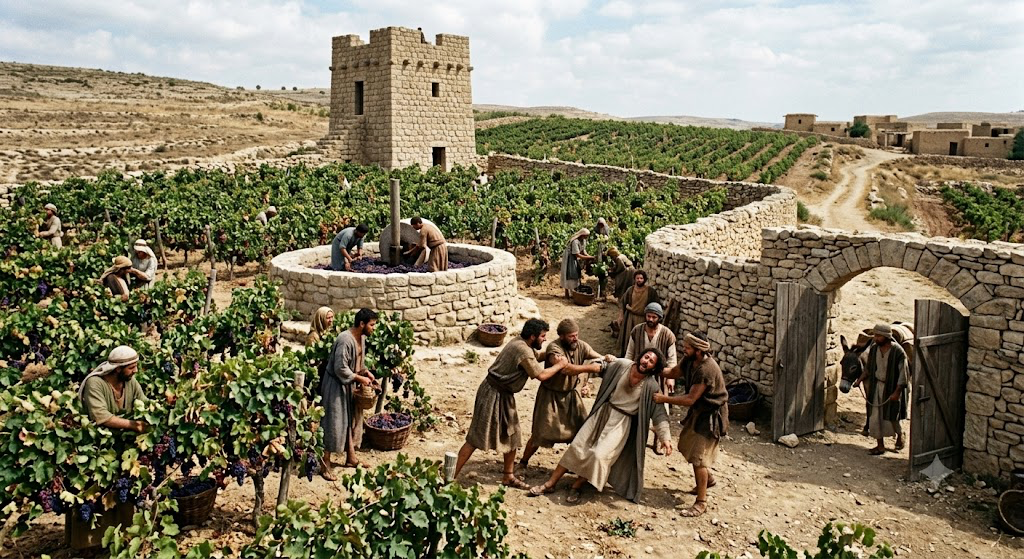
The Gospel text – The Parable of the Wicked Tenants – invites the children of God to bear fruit in our lives. In the parable, the landowner represents God, who lovingly prepares His vineyard, which symbolizes Israel. The chief priests and the elders of the people are the tenants to whom Jesus addresses the parable. The maltreated, beaten up, and killed servants represent God’s prophets and emissaries in the Old Testament. The Son represents Jesus Christ, the heir whom the tenants throw out of the vineyard and kill. Jesus quotes Psalm 118:22 to show that the stone that the builders rejected becomes the cornerstone of God’s work.
Beyond the functional symbolism, the lessons that the parable carries are more profound. Firstly, Jesus clearly establishes that the vineyard is God’s generous gift to the tenants and not something that they worked for or earned. However, they become wicked when they forget God’s generosity and stage a violent rebellion against God when they maltreat, beat up, and kill not only the servants but also the Son himself. When greed blinds them, they prefer possession to God’s relationship. Secondly, we must note that God only demands what belongs to Him, not the entirety of the produce. It has been mentioned that God sent His servants ‘to obtain His produce.’ Is it wrong for God to ask for what belongs to Him? Here, Jesus helps us witness the injustice that God condemns in the first reading. Though God shows immense patience by repeatedly sending His servants and finally His own son, the wicked tenants prove to be ungrateful and unaccountable, forgetting the moment of reckoning that awaited them. Thirdly, Jesus makes it categorical that bearing fruit is not an act of charity but faithfully returning to God what belongs to Him ultimately. Hence, Christian fruitfulness must be measured by a life of repentance, patience, love, forgiveness, and generosity, and not by meticulously observing meaningless rituals that betray the lack of disposition of the heart. We must pay heed to Jesus’ warning: ‘The Kingdom of God will be taken away from you and given to a people that will produce its fruit.’ The parable calls us to grow into people rich with faith, hope, and charity rather than people who act out of selfishness and rebellion.
The twenty-seventh Sunday inspires us with points for pro-action.
1. Spiritual response is an issue of accountability. Fruitfulness is the goal of a God-centered life. Hence, moral uprightness comes when we freely respond to God’s generosity and love.
2. A guarded mind becomes a mental shield against all that distracts it. Controlling our focus is key here. An anxious heart finds its peace with the right focus that is Jesus Christ for us.
3. A distinction between greed and gratitude is essential for our lives. Consumed by greed, the wicked tenants could only see what was missing in their lives. Instead, gratitude will help us see how God has blessed and cared for us.
Let us pray that we may manifest our faith by bearing fruits in the way God wants us to.
Fr. Dhinakaran Savariyar
Discover more from Gospel Delights
Subscribe to get the latest posts sent to your email.