
Sunday, October 11, 2026
Twenty-Eighth Sunday in Ordinary Time
Is 25: 6-10a; Phil 4: 12-14, 19-20; Mt 22: 1-14
The twenty-eighth Sunday demands an inward acceptance of God’s invitation so that we may manifest the fruits of such an invitation outwardly.
The three readings of the day invite us to reflect on joy, trust, and readiness.
The first reading presents a picture of hope and divine restoration for God’s people. Isaiah’s message unfolds in four steps. Firstly, it talks of the eschatological banquet. The description of the rich food and choice wines symbolizes the abundance that comes from God. Here, one may find the message already transitioning from judgement to comfort and communion with God. More importantly, the universal scope of salvation finds a strong mention here. The divine hospitality is so radical that it breaks down all human-made barriers so that the feast is prepared for ‘all peoples’ and ‘all nations.’ Secondly, the prophet announces the destruction of death and grief. God removes the ‘shroud’ or ‘veil’ that symbolizes mortality and mourning. By destroying death forever, God now shows that He is the God of life. By wiping away tears, God takes away the shame or disgrace that has fallen on God’s people. Finally, God’s mighty intervention results in people’s confession of faith. They now sing joyfully, ‘Behold our God, to whom we looked to save us! This is the Lord for whom we looked! Let us rejoice and be glad that he has saved us!’ This also reveals their trust in the sureness of God’s decisive intervention. Thus, the first reading highlights the truth that God will bring all His promises into reality.
The second reading invites us to reflect on Paul’s attitude towards privation and renunciation. While privation is external, renunciation is internal. Paul reveals that he knows how to live with little and with much. Paul has acquired an attitude of contentment, which, as a spiritual quality, helps him endure hardships and avoid jubilation in plenitude. This quality of contentment arises from his firm trust in God’s providence. This is why he is able to affirm, ‘I can do all things in him who strengthens me.’ Paul is neither intimidated by life’s wants nor comforted by affluence because his sufficiency comes from Christ himself and not from his environment. Here, we must note that though Paul found strength in Christ, he still acknowledges the Philippian community’s faithful accompaniment through his time of distress. Thus, Paul encourages the Philippian community in sharing and generosity, invoking their faith and trust in God’s providence and provision.
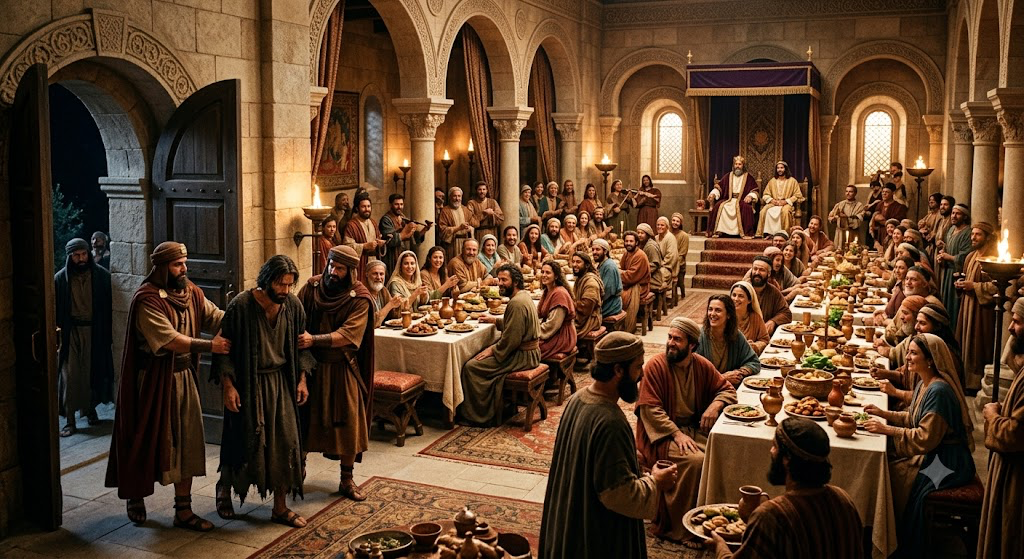
The Gospel presents the Parable of the Wedding Banquet in which, Jesus compares the Kingdom of Heaven to a king hosting a celebration for his son. Oftentimes, the parable appears difficult to understand because when those who were invited became unworthy of attending the banquet, the invitation is now extended to people on the main roads and whomever they can find. Here, the case of a man without the wedding garment needs unpacking.
Indeed, the king’s invitation is extended indiscriminately to everyone at the last minute. However, the last-minute invitation still deserves to be treated with respect if we choose to accept it at all. In that sense, the man without the wedding garment is not prepared to participate in the king’s joy. Secondly, the king invites his guests for a fullness of experience. Therefore, the invitation itself is an expression of the king’s generosity. As such, the guests are called not merely to eat the food but also to participate in the celebration of the royal wedding. However, the man without the wedding garment reduces the invitation to just the food dimension alone. He is unable to see beyond the food. Thirdly, not wearing the wedding garment discloses the lack of inner disposition. The man’s silence also illuminates his unwillingness to be prepared for the king’s invitation. Thus, his behaviour reeks of a failure to appreciate the significance of the occasion to which he has been invited. Finally, the man’s improper attitude is a warning sign for us to rise above mere sensory satisfaction to spiritual disposition. The man’s longing for a sensory experience with food forbids him from exploring further into the good-willed and generous nature of the invitation to cherish the king’s hospitality. As a result, the man without the wedding garment is not disposed to enjoy the king’s invitation, though the latter demands a heart to receive what the king generously offers. In sum, the Parable of the Wedding Banquet invites us to put on an attitude of commitment and responsibility to respond to and enjoy God’s generous invitation.
The three readings invite our reflection and action on heavenly joy, banking, and foretaste.
1. Heavenly Joy: Joy is the foretaste of heaven. Food and wine symbolize divine grace and heavenly joy. When we commune with God, we enjoy the deepest joy, which helps us understand the heavenly bliss.
2. Heavenly Banking: When we give out of love for God, such selfless generosity is always rewarded by Him. Our partnership in the Gospel comes from doing things to enable its proclamation, which demands a selfless goodwill.
3. Heavenly Foretaste: The wedding banquet symbolizes the foretaste of heaven, which is the fullness of life in God’s presence. Only with the wedding garment – the proper disposition – we become receptive to the heavenly experience that God has in store for us.
Let us pray that we may cherish and respond to God’s invitation generously and properly.
Fr. Dhinakaran Savariyar
Discover more from Gospel Delights
Subscribe to get the latest posts sent to your email.