
Sunday, October 18, 2026
Twenty-Ninth Sunday in Ordinary Time
Is 45: 1, 4-6; 1 Thess 1: 1-5b; Mt 22: 15-21
The twenty-ninth Sunday invites us to show ultimate allegiance to God, the author of our lives.
The three readings of the day focus our attention towards this truth.
The first reading establishes God’s absolute sovereignty, though it begins by indicating Cyrus, the Persian king, as a useful instrument in the hands of God. The pagan king is hailed as God’s ‘anointed,’ who would allow the exiled Jewish people to return to Jerusalem and rebuild their temple. This passage reveals God’s love in two profound ways. Firstly, God instrumentalizing the pagan king Cyrus indicates that God works through anyone to accomplish His purposes. This happens even as God speaks of Cyrus as, ‘Though you know me not.’ God’s historical intervention transcends boundaries like politics, faith, and region, and it often directs historical occurrences to His redemptive goals. Secondly, when it comes to the welfare of His people, God makes use of even pagan kings to redeem them. Here, as we can see, God’s love defies logic. The story also manifests God’s covenantal fidelity towards His people. Here, we must note that it is God’s love that is in focus, not the greatness of King Cyrus. Indeed, Cyrus is the art. But God is the masterful artist.
The second reading continues the first reading’s theme that we belong to God, who has given us the gift and privilege of vocation. If the first reading demonstrated God’s faithful action in favor of His chosen people, the second reading highlights that God’s action continues in the New Testament in a seamless manner. In two ways, Paul continues the theme of the first reading. Firstly, the gift and privilege of Christian vocation is God’s doing, though God instrumentalizes Paul, Silvanus, and Timothy just as God instrumentalized King Cyrus, as indicated in the first reading. Hence, the election to be God’s people belongs to God’s grace rather than occurring because of our own merits. Secondly, Paul writes that the ‘Gospel did not come to you in word alone but also in power and in the Holy Spirit and with much conviction.’ Here, Paul indicates the power of God at work beyond the instrumentalization of human agents. Indeed, Paul, Silvanus, and Timothy served as agents of God in proclaiming the Gospel to the Thessalonians. However, the inner work of conversion in human hearts belongs solely to God, just as the inner conviction is brought about by the Holy Spirit. Thus, we cannot overlook God’s role in the spreading of the Gospel or the inner work of conversion.
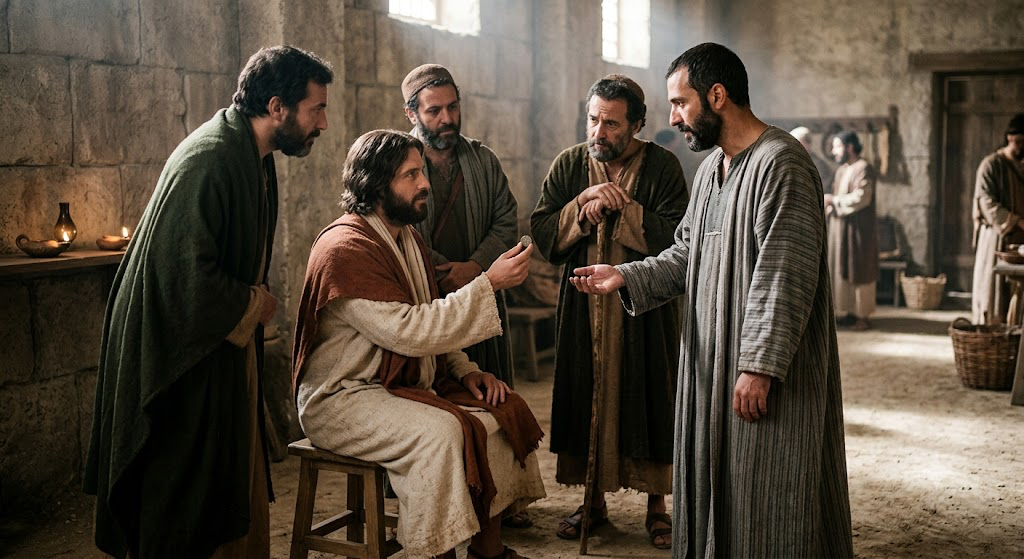
The Gospel text presents the encounter between Jesus and the religious leaders as the latter lay traps for Jesus with a question about paying taxes to Rome. The text alerts us about their cunning scheme as the Pharisees express their hollow and unconvinced praise for Jesus. Their question, ‘Is it lawful to pay taxes to Caesar or not?’ hides within it a dilemma. If Jesus were to answer ‘yes’ to it, he would be pitted against his own Jewish people, who detested the Roman taxes, besides viewing Rome as a foreign pagan oppressor. If he were to answer ‘no,’ he would be reported to Roman authorities as initiating treason and insurrection. However, Jesus evades the trap through his smart answer, ‘Repay to Caesar what belongs to Caesar and to God what belongs to God.’
In his answer, Jesus clears two misunderstood notions. Firstly, Jesus establishes political power and religious authority to be two different realms. It need not be that one should be opposed to the other. However, in view of each of their objects, they should maintain their independent autonomy, though it does not rule out collaborating together for the common good. Secondly, though Jesus acknowledges the secular political power of Caesar, he still subjects such authority ultimately to God. For Jesus, kings are God’s emissaries on earth, and their authority over people comes from above. Indeed, the coin carried the image and inscription of Caesar. But only that much and nothing more! Whereas all of humanity carries the ‘Image and Inscription of God’ (Imago Dei). In a way, Jesus helps us understand that Caesar’s authority ends with a material thing like a coin, while God’s own spreads through the entirety of creation. Thus, Jesus is smart enough to elevate what was meant to be a cheap political trap into a lesson on the question of true worship and identity as belonging to God alone, whose image and identity humanity and the entire creation bear.
The three readings of the day inspire us with actionable insights.
1. An Invitation to Hope: According to Thomas Aquinas, the vice against the virtue of hope is despair. Do we realize that God is at work even when political upheavals or oppression take place? We are called to rest assured that God is actively working through chaos to bring about the common good and justice.
2. God Being in Charge: Paul lets us understand that the dynamic power of the Gospel and the work of conversion owe their credit to God alone. While God has the charge, we are His stewards on earth. Hence, it is better that we realize this truth and always proceed from such an awareness.
3. Allegiance to God Alone: Jesus teaches us that we fulfil our civic responsibilities because they are ordained by God for the good of all. Hence, they are to be obeyed not out of fear of secular authorities but because the command comes from God, to whom our ultimate allegiance belongs.
Let us pray that our lives may become a living witness to God, the author of our lives.
Fr. Dhinakaran Savariyar
Discover more from Gospel Delights
Subscribe to get the latest posts sent to your email.