
Sunday, July 19, 2026
Sixteenth Sunday in Ordinary Time
Wis 12: 13, 16-19; Rom 8: 26-27; Mt 13: 24-43
The sixteenth Sunday in ordinary time invites us to remember our vulnerability and weakness in the face of God’s benevolence and holiness so that we grow more reliant on God to purify ourselves.
The same idea is well-explained in all three readings of the day.
The first reading proclaims God’s might and helps us realize that only the pure and holy God can transform our vulnerable and weak hearts into instruments of mercy and justice. The reading underlines the fact that if not for the mercy, love, compassion, and forgiveness of God, none of us would be saved. The good and perfect God exercises power with mercy rather than domination. God’s holiness seeks our conversion, not destruction. Hence, we find our strength renewed when we seek God’s benevolence. Relying on God’s righteous love helps us transcend our limitations, and that is the perfect solution to overcome our weakness and vulnerability.
In the second reading, St. Paul prepares us for another shock. He says, ‘We do not know how to pray as we ought’ but for the help of the Holy Spirit. Thus, Paul reveals the depth of our weakness and imperfection. However, we should not lose hope, because it is often our vulnerability that becomes a place of encounter with God’s healing presence. The Spirit of God holds us up precisely where our human strength falters. Hence, we should not grow too self-righteous about being regular to church and sacraments, taking up charity in good spirit, or our neighborliness. With all our good will and its imperfections, Paul wants us to surrender to God, who alone can strengthen and restore our fragile lives.
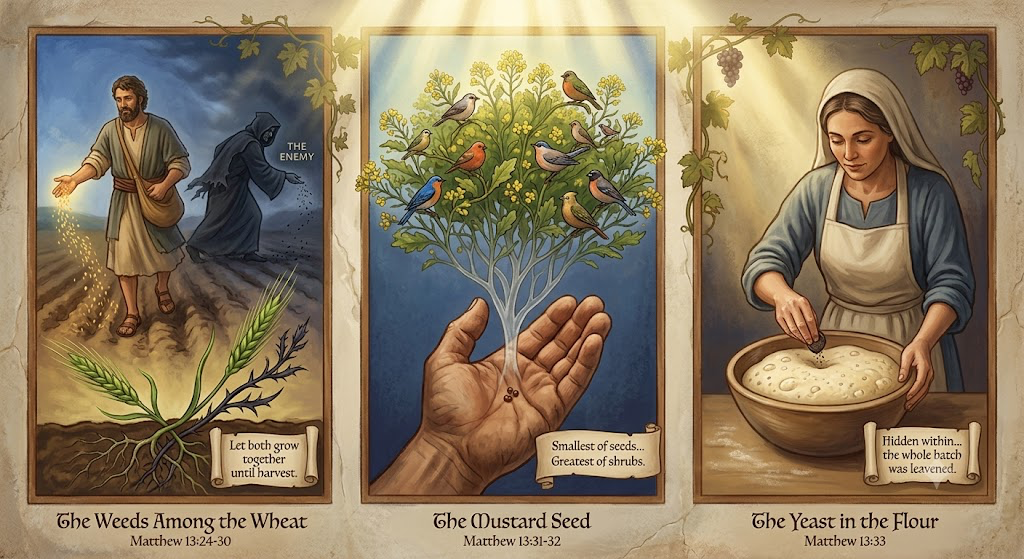
The Gospel text on the parable of the weeds continues the discussion, reminding us that good and evil coexist both in the human heart and in the world. Hence, it is again a text that discusses our vulnerability and weakness and underlines the need for us to rely on God. We all come with original grace from God. But in the course of time, we let our sins blemish our souls. The good God only sows wheat. But as we grow, we find the presence of weeds too in us. This is where we are called to remember that we cannot overcome our sin without God’s transforming grace. Hence, the realization of our sinfulness should lead us to surrender to God.
Through the parable, Jesus wants us to understand that we cannot distinguish the good and bad based on their appearances, which are deceptive. The biblical scholars opine that both the wheat and weeds looked alike. The weeds looked so alike that except for the grain, which was black as opposed to the wheat, which was golden, everything else resembled each other. The dark weed could be bitter and poisonous sometimes if it got mixed with the dough. The reality of wheat and weeds looking alike can be extended to the human world, where it looks hard for us to differentiate between the good and the bad. But only God can look into human hearts. While it is not for us to judge others, trusting in our self-righteousness, the good God patiently awaits the repentance of the bad. The same God wishes that good people continue to grow in their holiness.
Likewise, the parables of the mustard seed and the yeast remind us of how God’s grace often works quietly within us, strengthening us despite our weaknesses and imperfection. The passage also underlines the slow but sure transformation of our lives when lived according to God’s plan, though we may not immediately see or recognize it. All we need to do is to surrender ourselves to God in humility, trusting that God’s wisdom and timing will do wonders in our lives.
The three readings leave behind powerful insights for life.
1. Pope Leo, in his Magnifica Humanitas, writes that ‘Everything that appears as a ‘limit’ – incapacity, illness, old age, suffering, vulnerability – tends to be seen primarily as a defect to be corrected, rather than as a reality through which our humanity matures and opens itself to relationship. And yet we must remember that humanity flourishes not despite limitations, but often through them’ (No. 118). Human limitations are a loud reminder that we need God to strengthen us and give meaning to our lives.
2. We are called to trust in God’s mercy rather than relying on our own merits or righteousness. God’s love perfects what is lacking in us. Wise people say, ‘In our strength we are admired, but in our weakness we are loved.’ We must allow God to love us unconditionally and fill our being.
3. The recipients of God’s mercy should disseminate the same to others. We must remember that our duty is to continue to show compassion and encouragement while leaving the part of judgment to God. We are called to radiate God’s patience and mercy in our relationships too.
Let us pray that, empowered by God’s grace, we may flourish through what we call weakness.
Fr. Dhinakaran Savariyar
Discover more from Gospel Delights
Subscribe to get the latest posts sent to your email.