
Sunday, March 22, 2026
Fifth Sunday of Lent
Ez 37: 12-14; Rom 8: 8-11; Jn 11:1-45
The Fifth Sunday of Lent invites us to behave as the people of resurrection.
The three readings of the day facilitate our reflection on the theme.
The first reading is taken from the passage on the Valley of Dry Bones. Graves and bones indicate lifelessness or sure nothingness. It is into those lifeless bones that God will infuse life. It is into those graves that God will breathe life and make people come alive. If a bone symbolizes something that was alive, God’s power brings it back to life. In sum, the first reading underlines the core theme that our God is a God of life.
In the second reading, Paul highlights the idea that Christians are empowered to live in the Spirit. He reminds his listeners that since the Spirit of God dwells in us, we are called to embrace a life higher than the one led in the flesh. The Spirit of God empowers us to honor Jesus and imitate him better. It is this Spirit of God who guides our paths and leads us towards Christ. It is the same Spirit of God who animates our being well in accord with those virtues that will make us godly. Thus, the transformative presence of the Spirit of God will make us alive through resurrection, though we might be dead in body.
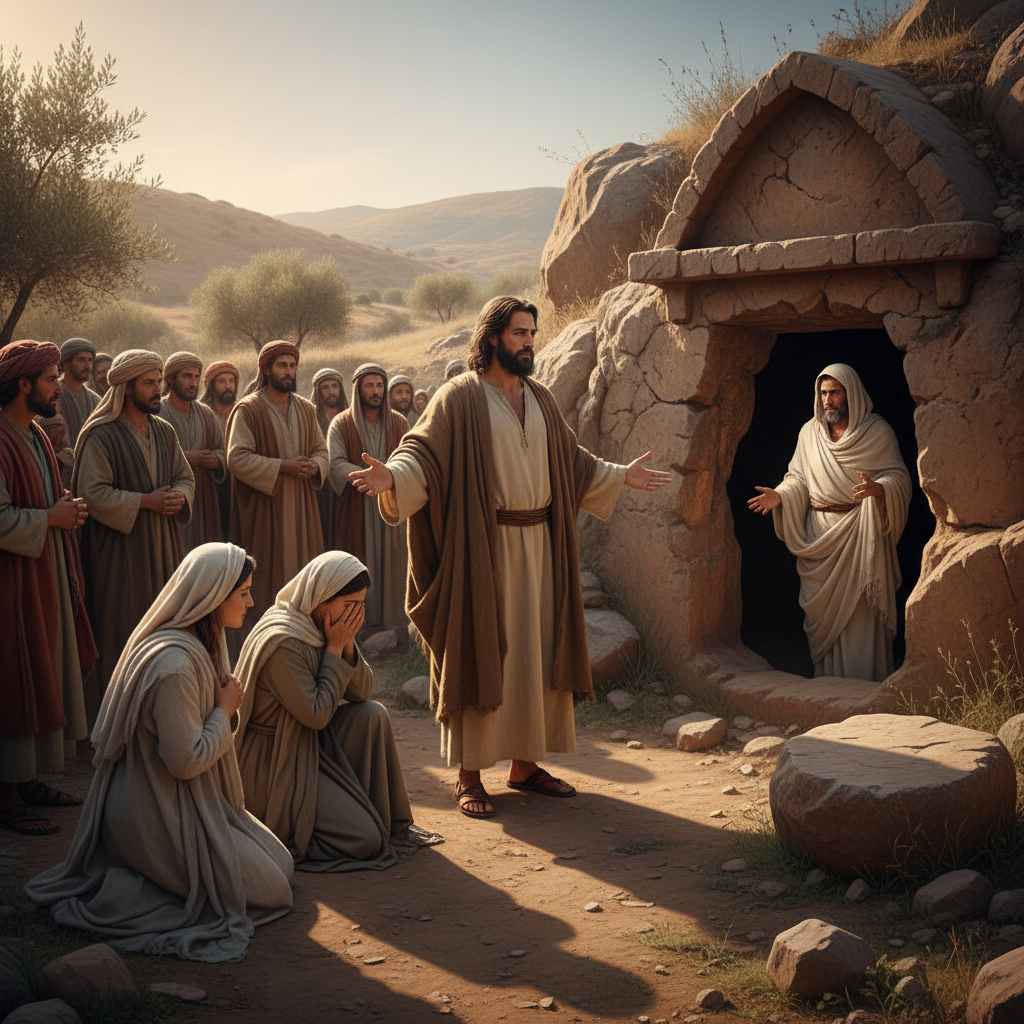
The Gospel text is on the raising of Lazarus. When Jesus is sent word about Lazarus’ sickness, Jesus does not hurry. But he assures, ‘This sickness will not end in death. No, it is for God’s glory so that God’s Son may be glorified through it.’ We must note that Jesus did not want the death of Lazarus. If so, he would not have wept for him. Jesus weeps only on two occasions. He wept over Jerusalem and, secondly, over the death of Lazarus, whom he loved most.
In raising Lazarus, Jesus manifested the glory of God. The text reads that ‘Jesus remained for two days in the place where he was,’ despite learning that Lazarus was dying. Why would he do so? If Jesus had arrived in Bethany immediately and raised Lazarus, the unbelievers would have misinterpreted the miracle, saying that Jesus healed Lazarus, who slipped into a coma and did not actually die. Hence, Jesus waits until it is four days for others to confirm that Lazarus’ death was real and in no way faked.
Besides, according to Jewish belief, after the death of the body, the soul of a person longed for reunion for three days. They believed that the soul left the human body permanently on the fourth day, when the real corruption of the body usually set in. Yet another detail that confirms the sure death of Lazarus is that his members were tightly bound, and his face was wrapped in a cloth, meaning that it would have suffocated the person to a sure death. This is why Jesus had to say upon raising Lazarus, ‘Untie him and let him go.’
Thus, the significance of the passage is to demonstrate that death and decay are not final words for anyone who believes in Jesus, who is ‘the resurrection and the life.’ The raising of Lazarus offers us a foretaste or is a prefiguration of our own resurrection. In this way, the Gospel theme aligns well with the themes of the first and second readings.
The readings inspire us with wonderful insights for reflection and action.
1. Our faith in life-affirming God should help us adopt life-affirming praxes. Today, human life has come under vicious attack, including abortion, poverty, homelessness, war, and violence. There is no situation that God’s power cannot renew, just like dry bones.
2. Jesus participates in our pain but transforms our grief into glory, just as we witness in the raising of Lazarus. We are called to imitate Jesus’ solidaristic love. Our accompaniment must become a source of consolation and joy for others.
3. We must also live as people of resurrection and hope. In other words, we must practice resurrection and make others partakers of the Good News that with Jesus there is only ‘life in abundance.’ Faith in Jesus helps us overcome the fears of illness or death.
Let us pray that we may always behave like the people of resurrection, blessed with abundant life.
Fr. Dhinakaran Savariyar
Discover more from Gospel Delights
Subscribe to get the latest posts sent to your email.