
Sunday, August 30, 2026
Twenty-Second Sunday in Ordinary Time
Jer 20: 7-9; Rom 12: 1-2; Mt 16: 21-27
The twenty-second Sunday invites us to lead our lives from God’s perspective.
The three readings of the day help us understand the truth.
The first reading highlights prophet Jeremiah complaining to God. What is more, he accuses God of deceiving him. While the words of the prophet are shocking, we may also see that as an emotional outburst of a desperate man. However, what we must notice is that Jeremiah does not hide his pain. And God allowed Jeremiah to have such an honest encounter because the prophet’s proclamation of warning and judgement only earned him the mockery of people. Thus, the cost of speaking God’s truth was unbearable for Jeremiah. Yet we witness something contradictory here. Though Jeremiah wants to escape God’s work and is resolved to speak no more in God’s name, the power of God’s message becomes like ‘a burning fire in his heart, imprisoned in his bones.’ As God’s faithful prophet, Jeremiah finally understands that his silence would be more intolerable than the suffering that God’s mission entailed. Hence, the prophet realizes that he can live in peace and quiet only by faithfully ministering to God. Though life is a struggle, we discover its meaning only with God’s grace.
In the second reading, Paul invites us to present our body as a living sacrifice because it represents the whole person and it belongs to God. In extension, we may also understand that Paul invites us to offer our lives as a living sacrifice to God. We must note the contradiction here: usually what is living is not offered as a sacrifice but only what is dead. What does Paul mean here then? Through the phrase, Paul insists on a daily surrender so that, by making an offering of our daily actions, time, and choices to God, we purify and renew ourselves with the help of God’s grace and mercy. For this reason, for Paul, true worship means treating our daily lives as an act of worship. Such true worship is possible when we do not conform to this world and resist the pressure of worldly values like pride and greed. The marker for true worship is in the way we discern God’s will by doing what is good and pleasing to God. In essence, Paul wants us to examine if we are conforming to the world or being changed by God. For Paul, we are a living sacrifice to God by not being conformed to this world.
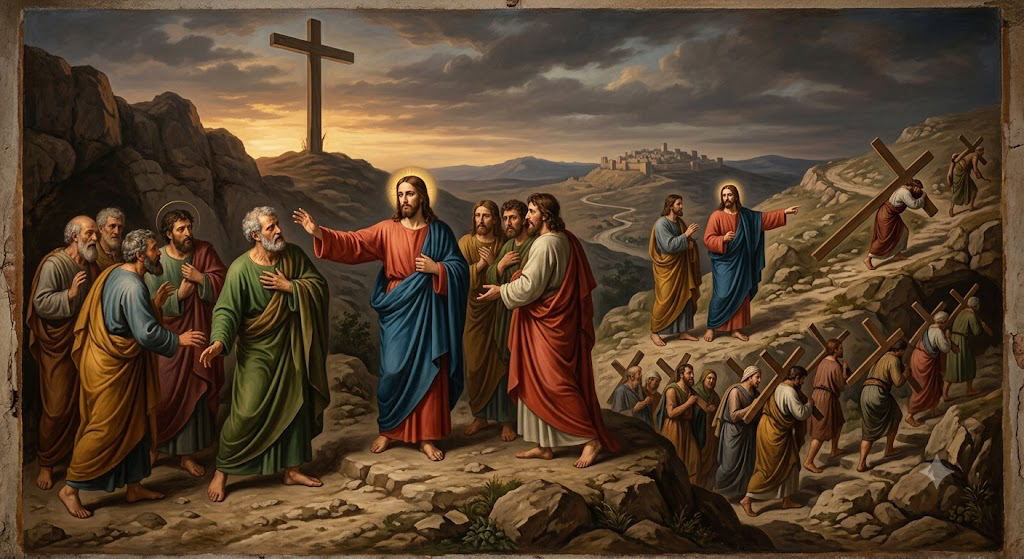
Today’s Gospel identifies God’s will as the yardstick for Christian life. When Jesus foretells his suffering and death, Peter objects to it, thus daring to defy God’s plan for humanity. Jesus exposes Peter trapped in human expectations without discerning God’s will. Jesus leaves a clear instruction that our plans must align with God’s own. Secondly, Jesus invites his disciples to a radical form of discipleship as well. As such, denying oneself, taking up the cross, and losing one’s life to truly find it are underlined as discipleship after God’s own heart because Jesus himself exemplified it. Jesus’ instruction to Peter carries crucial insights for us. Our own spiritual journey involves hardship and suffering. We overcome them only by God’s grace. Secondly, we should check ourselves if our goals are built on worldly success or Kingdom values. Finally, for a Christian, fulfillment comes from total surrender to God and understanding God’s plan for our lives.
The twenty-second Sunday offers at least three key takeaways.
1. Authentic faith allows us the freedom to argue and fight with God. Such moments capture the struggles of a sincere heart. We remain with God and within His Church to continue to find meaning through such struggles.
2. When we give ourselves to God, it is reflected in how we live. Christians cannot claim to believe in the Gospel without attempting to live it in everyday life. Living the Gospel truth is the best way to proclaim it.
3. Jesus reminds us that discipleship is more than simply believing in him. It mandates that we continue the process of discernment in order to know God’s will for our lives and look for ways to implement it in our lives. It is to live our lives from God’s perspective.
Let us pray that our lives may testify to God’s will and wisdom.
Fr. Dhinakaran Savariyar
Discover more from Gospel Delights
Subscribe to get the latest posts sent to your email.
Amen